The death on 4 March 2025 of Oleg Gordievsky, British intelligence’s mole in the KGB, prompts me to write about his escape from the Soviet Union in July 1985, which had the hallmarks of a Hollywood thriller.
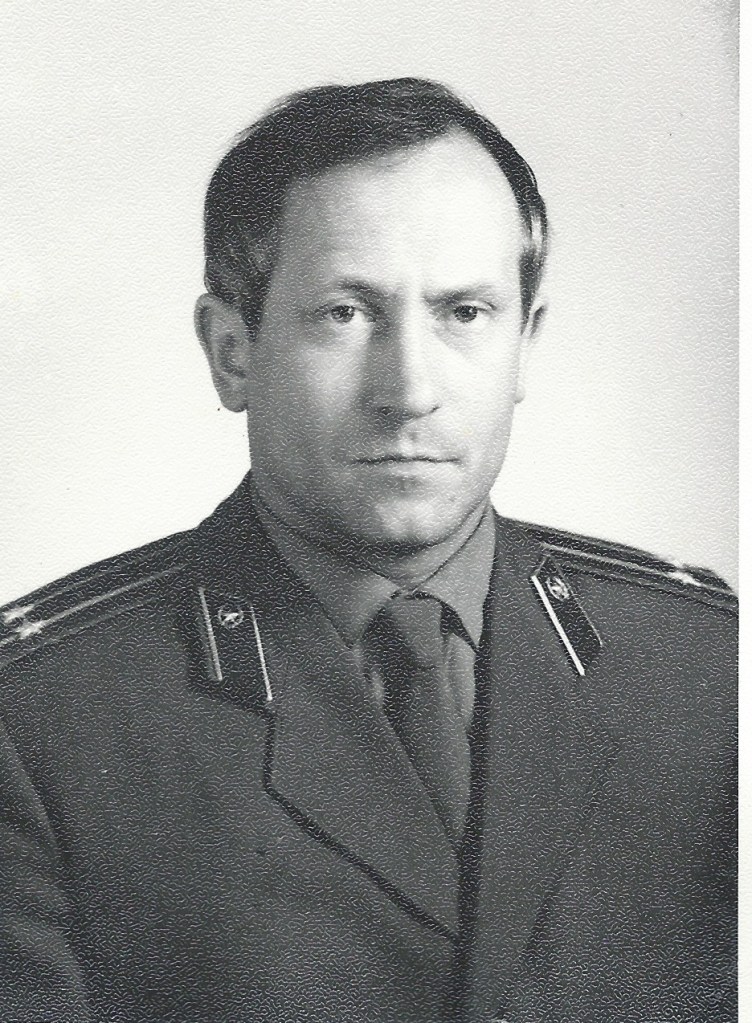
Life of Gordievsky
Oleg Antonovich Gordievsky (b. 10 October 1938) was educated at Moscow State Institute of International Relations (MGIMO), a prestigious university that prepared graduates for the Soviet foreign service, and continues to do so for the foreign service of the Russian Federation.
Gordievsky served briefly in the Soviet foreign service before transferring to KGB in 1963. His life has been summarized in obituaries published by The Guardian and The New York Times; and a fuller account can be found in Ben Macintyre’s The Spy and the Traitor: The Greatest Espionage Story of the Cold War.
Gordievsky published an autobiography, Next Stop Execution, and co-authored with (Cambridge’s own) Prof. Christopher Andrew, KGB: The Inside Story; Instructions from the Centre: Top Secret Files on KGB Foreign Operations, 1975-85 (Russian edition) and Comrade Kryuchkov’s Instructions: Top Secret Files on KGB Foreign Operations, 1975-1985 (English edition).
Gordievsky was a mole for SIS (Secret Intelligence Service, or MI6) from 1974 to 1985. In many ways, he was an analog to Kim Philby. He was based at the Soviet Embassy in London from June 1982, and in April 1985, designated the Rezident (equivalent to CIA Station Chief). However, he was recalled to Moscow in May due to suspicions that he was a mole. Aldrich Ames had betrayed him.1 His “great escape” was made in July of that year.
The Great Escape

British intelligence (SIS, MI6) could have helped Gordievsky defect when he was recalled to Moscow, but both parties discussed the matter and decided that if Gordievsky could bluff his way out of trouble and return to the Soviet Embassy, London, as Rezident, he would be a major asset. But in Moscow, Gordievsky was drugged and interrogated for five hours to six hours (he claims), which is when he realized that he had only two paths ahead: exfiltration or execution.
Operation Pimlico, as the exfiltration plan was known, called for Gordievsky to appear at a specified street corner at 7 p.m. on a Tuesday, carrying a Safeway shopping bag, and make eye contact with a man carrying a Harrod’s bag—how very British!—and munching on a Mars bar or Kit Kat. First Tuesday contact failed but succeeded on the following Tuesday.
The exfil was launched by SIS/MI6. First, Gordievsky had to give the KGB surveillance team the slip through extensive “dry cleaning,” then catch the 5:30 p.m. train, Friday, 19 July 1985, to Leningrad (St. Petersburg). Safely in Leningrad, he had to take another train and bus, before concealing himself in a pre-appointed spot in a forest south of the Finnish city of Vyborg to await the British exfil team.
KGB, meanwhile, were following the two British embassy cars that were heading north to meet Gordievsky. The British exfil team consisted of two diplomats and their wives, ostensibly on a trip to Finland. KGB’s surveillance of the British diplomats was standard, i.e., they had no idea that the team was meeting with Gordievsky, who had evaded surveillance the entirety of his journey from Moscow to the forest.
Gordievsky was bundled into the boot of one car (both cars had diplomatic plates) and driven across the border. The cars could not legally be searched—unless KGB knew Gordievsky was inside and willing to spark a diplomatic row to get him—but KGB and Soviet border guards did use sniffer dogs to examine the vehicles. To throw the dogs off the scent—literally—a diplomat (allegedly) dropped her baby’s soiled diapers on the ground, upsetting the hounds. The defector made it to Finland, thence to UK via Norway.
Or so the story goes.
- Aldrich Ames learned of the possibility of a high-placed mole in KGB, which pointed towards Gordievsky, because the Agency was jealous that SIS may have a double-agent that they had not disclosed to CIA. (To be clear, SIS is not required to disclose their assets to CIA, nor does CIA disclose its assets to SIS.) The Agency, instead of launching an investigation to identify the KGB mole inside CIA, launched an investigation to identify SIS’s mole in KGB. Typical. CIA. BS. ↩︎
 Perspectives
You must be logged in to post a comment.