St. Matthew writes of men from the east visiting Jesus. His narrative reflects a Zoroastrian prophecy. The “Wise Men” who visited Bethlehem from Iran were Zoroastrian priests (magi) who had seen the star and believed that Jesus was their expected Savior—“Saoshyant.”

St. Matthew
Mark, Luke, and John are silent on the birth of Jesus Christ. St. Matthew is the sole source. He does not mention how many Magi visited Bethlehem. Tradition says “Three Wise Men,” presumably based on the number of gifts (one gift per visitor: “gold, frankincense, and myrrh”), but the three gifts in combination, irrespective of whether offered by one person or a group, are symbolic (see “The Gifts” below). But first, St. Matthew:
Gospel of St. Matthew: The Visit of the Magi

2.1. When Jesus was born in Bethlehem of Judea, in the days of King Herod, behold, magi from the east arrived in Jerusalem,

2.2. Saying, “Where is the newborn king of the Jews? We saw his star at its rising and have come to do him homage”

—Catholic Bible—
The Star
In Zand-i Wahman Yasn, a Zoroastrian apocalyptic text, the following prophecy is found: “[In the religion it is revealed] that the night when that kay will be born a sign will reach the world, a star will fall from the sky.” Zand-i Wahman Yasn, § 7.6, ed. and trans. Carlo Cereti (Rome, 1995). Alternative translation: “On the night when the Kaye will be born, a token will come to the earth, a shower of stars will rain from the sky.”
Carlo Cereti notes, “[t]he parallelism to the Christian tradition of the birth of Jesus Christ is evident” (Cereti, Zand-i Wahman, 162). The composition of Zand-i Wahman Yasn is dated to the early Islamic era (c. 570–650 AD)—centuries after Jesus Christ—but its contents include apocalyptic traditions pre-dating Christ (see Cereti, Zand-i Wahman, 15–27).
The Savior (“Saoshyant”)
Pre-Christian Zoroastrian apocalyptic traditions include that of the “Saoshyant”—“He who will bring benefit”; the bringer of salvation to the world, i.e., “Savior” or “World Savior.” See Mary Boyce and Frantz Grenet, A History of Zoroastrianism (Leiden, 1991), vol. III, 141, 375; Mary Boyce, Zoroastrians: Their Religious Beliefs and Practices (London, 1979), 42–43.
According to Zoroastrian thought, their Savior will be born miraculously of a virgin (Boyce, Zoroastrians, 42, 74; Boyce & Grenet, Zoroastrianism, III, 451). A 9th-century AD commentary relates how a religious instructor “prophesied to his disciples that a child would be born of a virgin, would be crucified and mourned by all nations, but would return with the armies of light” (Boyce & Grenet, Zoroastrianism, III, 451). Other links to the birth of Christ and the Saoshyant prophecy are found in Zoroastrian literature (ibid.).
The Magi
“The oldest known commentary [Opus imperfectum in Matthaeum] on the passage [St. Matthew, 2.1] identifies the magi as ‘eastern men who came from Persia [Iran]’.” Boyce, Zoroastrianism, vol. III, 448. Latin Magi (plural of magus) are Zoroastrian priests (Old Persian: magu). They had been surveilling for the prophesied star, which they saw from Iran and followed to Palestine. According to the medieval Chronicle of Zuqnin:
Twelve magi down the generations kept watch every year outside this cave; and at last a brilliant star appeared, as if raised on a pillar. This star descended into the cave, into which a voice summoned the magi. There they saw that its light had concentrated itself into the form of a tiny man, who greeted them and bade them follow the star to Palestine, carrying the treasures from the cave as gifts to the new-born saviour.
Boyce & Grenet, Zoroastrianism, III, 450.
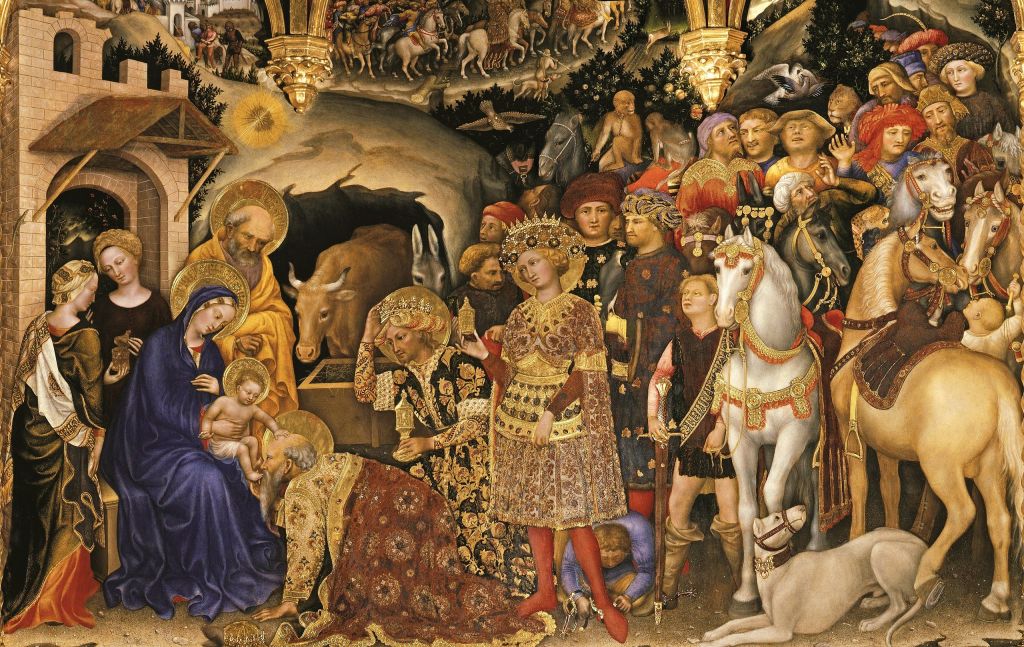
The Gifts
Gospel of St. Matthew: The Visit of the Magi

2:9: After their [the Magi’s] audience with the king [Herod] they set out. And behold, the star that they had seen at its rising preceded them, until it came and stopped over the place where the child was.

2:10: They were overjoyed at seeing the star,

2:11: and on entering the house they saw the child with Mary his mother. They prostrated themselves and did him homage. Then they opened their treasures and offered him gifts of gold, frankincense, and myrrh.

2:12: And having been warned in a dream not to return to Herod, they departed for their country [Iran] by another way.

—Catholic Bible—
The gifts, or “treasures” brought by the Iranians are not detailed in Zoroastrian literature, but believed to be “gold, frankincense, and myrrh” (per Matthew 2:11). The gifts reflected, respectively, kingship, divinity, and healing. Tradition claims the three gifts were to test the child: if the baby chose gold, he would be a king, incense a god, myrrh a physician, but if baby Jesus accepted all three, he would be ruler, god, and healer.
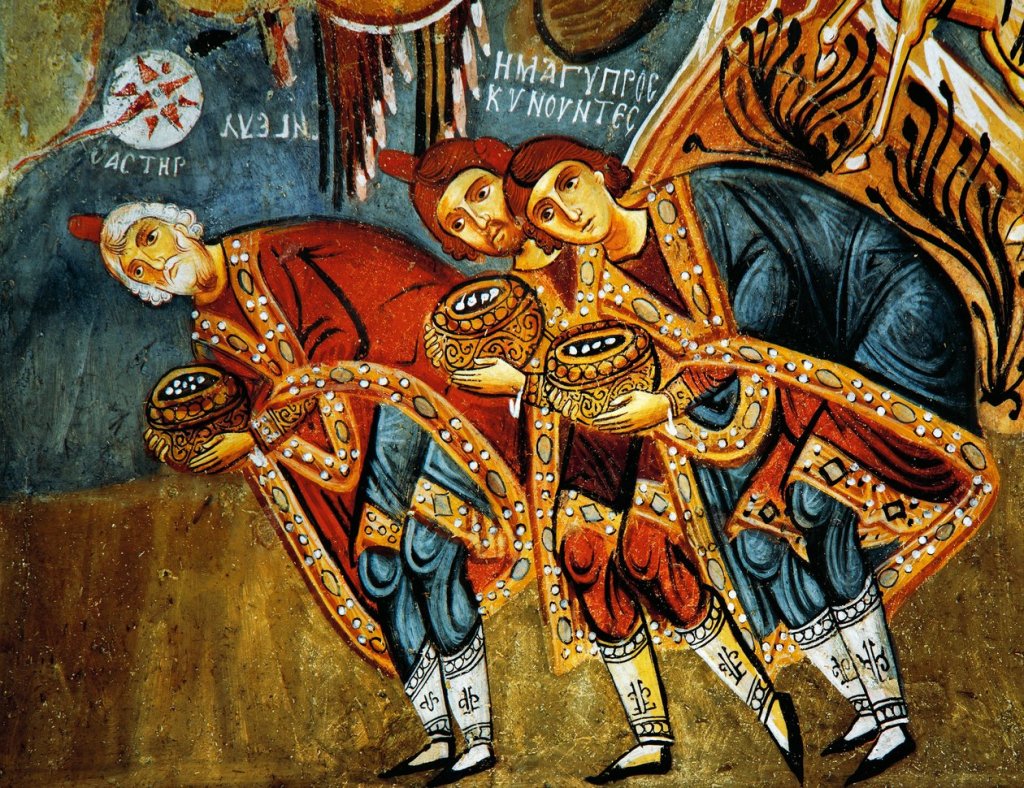
Remarks
In various editions of the Bible, “Magi” is translated as “wise men,” but while the Iranian pilgrims were surely wise, the translation obscures the national origins and religious roles of the pilgrims to Bethlehem, and the spiritual import of their three gifts: the Zoroastrian priests implicitly recognized Jesus as king, god, and healer.
The Iranians, apart from being the first to pay homage to Jesus, saved his life. Matthew 2:8: “He [Herod] sent them [Magi] to Bethlehem and said, ‘Go and search diligently for the child. When you have found him, bring me word, that I too may go and do him homage’.” But the Magi returned to Iran by another route (see Matthew 2:12), denying Herod the intelligence he needed to locate and murder Jesus.
“When Herod realized that he had been deceived by the magi, he became furious. He ordered the massacre of all the boys in Bethlehem and its vicinity two years old and under, in accordance with the time he had ascertained from the magi” (Matthew 2:16). After the Iranians left, Jesus and his family escaped to Egypt (Matthew 2:13-14), only returning to Palestine following the death of Herod.
Marco Polo (d. 1324)—not entirely a reliable source—claims to have visited Saveh (180km NW of Kashan, Iran), where locals told him that Saveh is the town “from which the three Magi set out when they came to worship Jesus Christ. Here, too, they lie buried in three sepulchres of great size and beauty…”
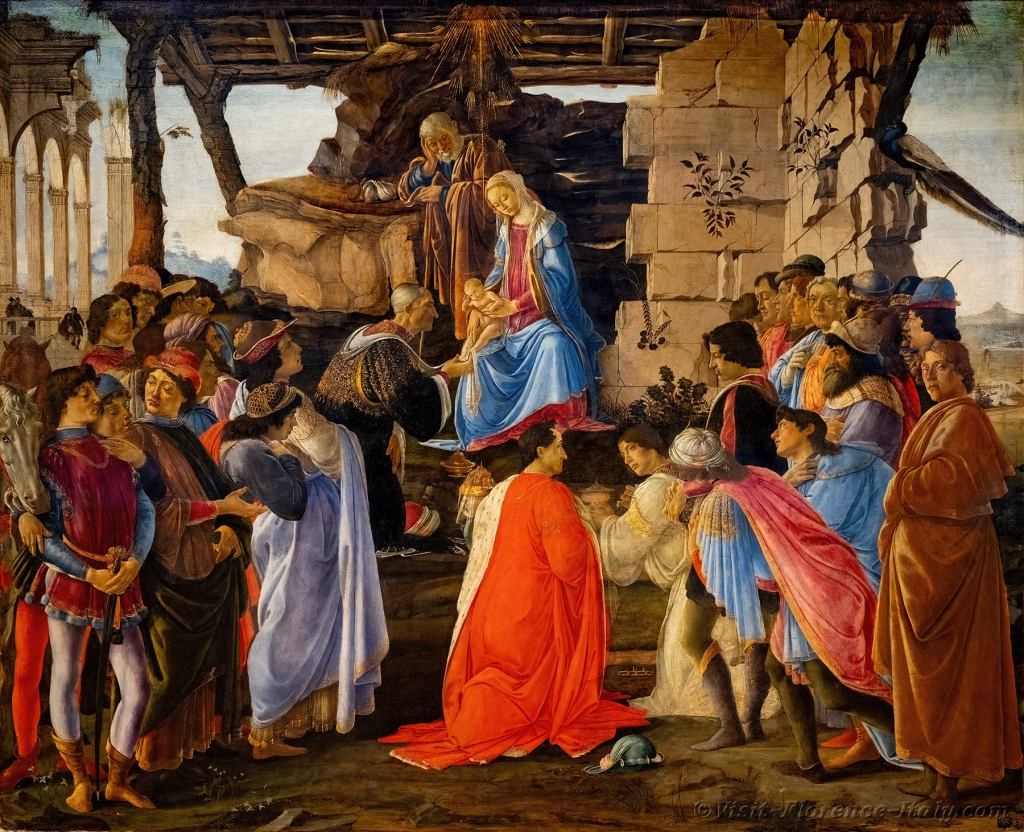
 Perspectives
You must be logged in to post a comment.