The fall of the House of Assad is not a debacle for Iran nor the death knell for the Axis of Resistance. Hizballah will thrive despite the fall of Assad, who was not pulling his weight. Iran appears to have conducted a cost-benefit analysis and determined that the financial and human costs of remaining in Syria and underwriting the Assad regime outweighed strategic and military benefits. Most relationships have inherent timers; the Assad-Iran marriage was ready for dissolution.
Origins of the Iran-Syria Relationship
The Iran–Syria relationship emerged with the 1979 Iranian Revolution and matured during the Iran-Iraq War (1980–88) when Hafiz al-Assad (d. 2000) actively supported Iran. The Assads (r. 1971–2024) are confessionally Alawi (Alawite or Nusayri). Alawi are notionally Shiʿa, but “[w]hether Alawites can be considered Shiʿi has been a matter of debate. Alawite and Twelver Shiʿah communities became increasingly close in the late 20th century.” Ayatollah Ruhollah Khomeini (d. 1989) catalyzed Alawi-Shiʿa relations by acknowledging the Alawis as Shiʿa. Many Sunnis, however, do not consider Alawis to be Muslim. Radical elements (viz., Wahhabis) consider them apostates.
Syria became a base for IRGC activities and conduit for arms supplies to Hizballah. Post-Saddam Iraq afforded a land corridor for IRGC supplies to reach the Syrian Army and Hizballah.
Doom-and-Gloom Analyses
Assad’s fall has generated a slew of essays predicting doom for Tehran. Jonathan Sweet, who claims to have thirty years experience with U.S. Army intelligence, demonstrates little intelligence in his co-authored, “Assad’s fall has Iran desperately searching for a new proxy”; the director of the MENA program at Chatham House claims, “The Fall of Assad has Exposed the Extent of the Damage to Iran’s Axis of Resistance”; Prof. Malise Ruthven, the well-respected scholar of Saudi Arabia, writes, “two of Iran’s ‘axis of resistance’ allies, Assad and Hezbollah, have effectively been sent off the field…”; The Wall Street Journal, predictably—it is owned by Rupert Murdoch—asserts that “Iran Suffers Blow of ‘Historic Proportions’ With Assad’s Fall”; and further, that “Trump Team Weighs Options, Including Airstrikes, to Stop Iran’s Nuclear Program”; the Daily Telegraph, “How Syrians toppled Assad and why Iran’s regime could be next”; former IDF soldier and propagandist for his Fatherland, Prof. Edward Luttwak writes, “Will Tehran be next? Iran’s myth of power has been shattered.” More of Luttwak’s anti-Iran gibberish here, here, and here.
Assumptions
An assumption is unstated information that must be true for the logic of the argument to work. Simply expressed, an assumption is something that the argument assumes while coming to a conclusion.
A premise is the starting point of the argument. The conclusion is what the author wants you to believe by the end of the argument. The assumption is the missing link between the premise and conclusion
Apart from anti-Iran and/or pro-Zionist propaganda essays, premises and conclusions of doom-and-gloom articles rest on assumptions: assumption that Syria still offered a land bridge between Iraq and Lebanon (it did not); assumption that the land bridge was necessary because IRGC was shipping heavy gear to Lebanon by land (it was not); assumption that Syrian airports still offered air bridges between Iran and Syria (assumes runways are not bombed by IDF); assumption that the Iran-Syria air bridge was indispensable to Iran and Hizballah (it was not); assumption that Syria was playing a critical role in fighting Israel (it was not); assumption that Syria was paying for the billions of dollars in military assistance that it received annually from Iran (it was not); assumption that Iran can indefinitely keep paying billions of dollars in annual economic aid to Syria (see below on “sunk cost fallacy”).
Above are just a few of the principal assumptions on which conclusions rest. An example of an easily refutable assumption is this claim by S&P Global: “Iran’s oil supply line to Syria appears to have been severed following the sudden fall of President Bashar al-Assad’s regime. . .in a blow to both the war-torn country’s energy supplies and Tehran’s outlets for its sanctioned oil.” Iran was supplying oil on credit; and Syria’s debt toward Iran cannot be repaid (see discussion below). The 750,000 barrels of oil in the Iranian tanker that turned back will be sold by Tehran for cash, not another IOU to add to Tehran’s pile of Damascene IOUs totaling $30 to $50 billion.
Questions to Consider
What role has Bashir al-Assad played in the “Axis of Resistance” (AoR) since 7 October 2023? How integral was Assad to the AoR and to Iran? Was Syria still a critical supply bridge to Hizballah? Was Syria a pivotal base for operations by IRGC and Hizballah? What were the economic and domestic costs to Tehran of maintaining its multi-faceted relationship with Damascus?
Political relationships are like marriages; they often run their course. Stasis or decline set in; neither party is ready to file for divorce—until external events compel them to re-evaluate a forty-five year-old marriage. Tehran’s commitment to Syria during the crisis years (2014 onward) were largely based on Tehran’s sense of loyalty to the Assad family. But loyalty has its limits.
Syria and the AoR
Syria is touted as an integral member of AoR, but what has Assad done in the past year to benefit Hizballah or Hamas? Or done directly against Israel since 7 October 2023? Nothing. One ex-U.S. Army analyst, whose report should be read in full, concludes that:
“The Iranians decided to leave Assad to his fate for a reason. Not only did Assad contribute nothing to [Iran’s] ‘Axis of Resistance’ project […] he was actually a drain on the [AoR] scheme—not lifting a finger against Israel…while expecting Hezbollah to commit troops and resources to buttress the SAA [Syrian Arab Army]…Meanwhile, he was also seeking to to realign Syria with the Arab states and distance himself from Iran.”
—Armchair Warlord—
SAA: The Syrian Army has been engaged with domestic conflicts (Kurds/SDF, ISIS, HTS, etc.) since 2011. By 2024, SAA was exhausted (see sections below, “Paying SAA” and “Motivation in War”).
Air corridor: the bridge between Iran and Syria frayed as IDF repeatedly bombed airports at Aleppo and Damascus to interdict supplies from Iran for IRGC and Hizballah. IRGC was forced to switch to the Russian airbase at Khmeimim for delivery of essential components.
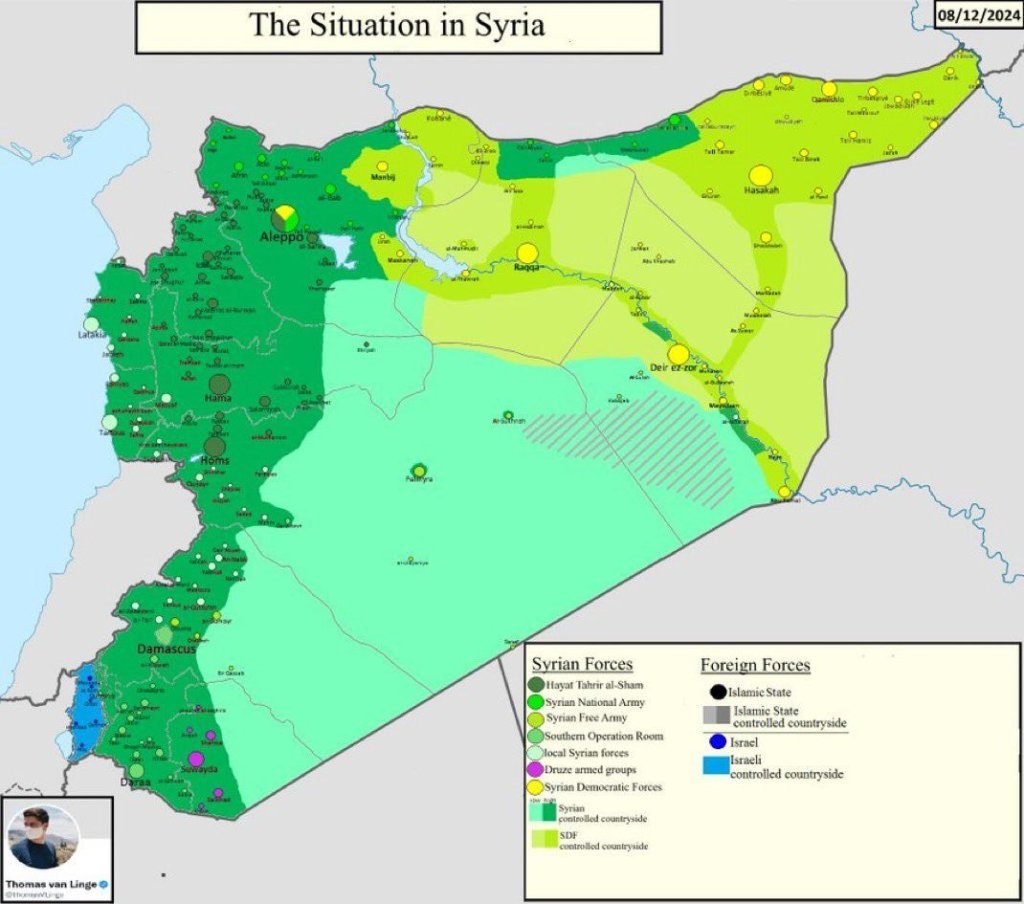
Land corridor: The route from al-Anbar (Iraq) to SAA-controlled regions of Syria was effectively dead (see map). It became untenable consequent to the fragmentation of Syria: supply trucks had to pass through unfriendly territory—and were likely to be picked off by Israeli or U.S. drones or fighter jets as they traversed the open spaces of Dayr al-Zūr (“Deir ez-Zor”) province.
Sea Bridge to Hizballah
IRGC transfers technology and technical skills to Hizballah and Ansarallah so they can be self-reliant on the production of drones, rockets, and missiles. This aspect has been well-publicized and shall not be addressed here. IRGC supplies key components that cannot be produced domestically. These can be smuggled into Lebanon or Yemen through seaports. Iranian vessels deliver goods to Lebanese ports without fear of interdiction by Israel or the U.S. Navy. Unlike just one decade ago, IRGC/Navy and IRGC/Aerospace have the land-based and sea-based weaponry to target Israeli and American military assets should they threaten Iranian vessels in the eastern Mediterranean.
Economic Burden on Iran
Iran is under “maximum pressure” sanctions and was underwriting a heavily-sanctioned country. The economic costs to Iran of sustaining Assad since the start of the civil war have been significant. Iran has spent an estimated $30–$50 billion (since 2011) to support the Syrian state. The probability of Trump lifting sanctions on Assad-led Syria was zero; and Iran is bracing for fresh economic attacks under Trump II. Was Assad worth the economic costs to Tehran?
1. Syria’s Debt to Iran and Domestic Political Ramifications
Parliamentarians in Iran have criticized government expenditures on Syria, 2011–2024; and the high level of Syria’s debt. Estimates of Syria’s debts to Iran range from $30 billion to $50 billion. It is easier for the Iranian government to justify to Parliament (majlis) and citizens annual expenditures for the “Lebanon Project” than for its “Syria Project.” Hizballah is fighting a genocidal settler colony and its western enablers; but Assad was doing nothing (one Iranian that I spoke with rendered his one word verdict on Bashir al-Assad: “useless”).
Syria could not repay its debts to Iran irrespective of whether the total is $30 billion, $50 billion, or a number in-between. If we utilize the estimate of $9 billion as Syrian GDP, then Damascus owes Tehran between three-point-three and five-point-five times Syria’s GDP (3.33 x 9 bil. = $30 bil. in debt; 5.55 x 9 bil. = $50 bil. in debt). Tehran had no hope of collecting on its IOUs given sanctions on Syria and the parlous condition of Syria’s economy.
2. Ongoing Iranian Financial Commitments to Syria
Two examples:
(a) Iran had committed to financial obligations that would have added to its pile of IOUs. For example, a 2022 contract to invest $2.2 billion in Syria’s energy sector. The contract had not advanced since its execution, but is effectively null and void today.
(b) Iran’s biggest commitment was supplying Syria with Iranian oil to replace Syrian oil stolen by the U.S. Syria’s reserves are minor, but had been mostly sufficient to meet civilian and military demands. However, Syrian oil fields in the northeast were occupied by U.S. troops during Trump’s first term. Extraction of Syrian oil continues under the U.S. occupation, but it is stolen by American companies and the U.S. Government. Trump explains the rationale for stealing Syrian oil:
“This land is my land, this oil is my oil, from Tel Aviv to Hong Kong island / From Gaza to the Persian Gulf”
Iran supplies to Syria an estimated 55,000 barrels per day (BPD) or ca. 21,000,000 barrels per annum. 2024 BPD volume, from Jan. to Nov., is lower than in previous years (e.g., 80,000 BPD in 2023). The cost of delivering oil—on credit—is conservatively estimated at $1.575 billion per year ($75 x 21 mil. barrels). Iranian sources claim $2 to 2.5 bil./yr. The tanker referenced by S&P Global contained 750,000 barrels of oil. Its return to Iran saved Tehran ca. $56,250,000 (ca. $75 per barrel x 750,000).
Bashir al-Assad’s Syria
Mister we could use a man like [Hafiz al-Assad] again / Didn’t need no welfare state / Everybody pulled his weight… / Those were the days.
—Apologies to Jean Stapleton—
Leadership
Bashir al-Assad was not like his father. He was the spare not the heir. Bassel al-Assad died in a car crash (1994). Bashir was dragged back from London and made successor. His political acumen is wanting: he failed to address legitimate protests in 2011 and refused to negotiate with the opposition in 2023–24 when Tehran encouraged him to seek settlement. When Iranian intelligence warned of the build-up in Idlib and in terrorist camps on the Turkey-Syria border, and urged Assad to act, he did nothing. Aleppo fell; he still did nothing. HTS swept through the country. As one commentator noted (I forget who), “it’s as if Assad gave two weeks notice before quitting his job.”
Realigning Syria with Gulf Arab States
Tehran favored Assad’s development of diplomatic relations with Qatar and Saudi Arabia, but Assad was being seduced by promises of investments in Syria and debt relief aid—if he distanced himself from Iran and Hizballah. Their entreaties were potent: Syria’s debt to Iran would be impossible to repay without external aid. The closer Assad moved towards Qatar and Saudi Arabia, the less useful he became to Iran and AoR. It would have been humiliating for Iran if Assad performed a 180° and booted Iran from Syria in exchange for financial aid from Gulf Arab states; and normalized relations with Israel, which would have set Syria on the path to sanctions relief.
Paying SAA
Salaries and bonuses for SAA officers and enlistees were low. Just before the fall, Assad raised bonuses—by $7.50 per month. Unverified reports claim HTS fighters were paid $2,000. Assad could not match even 25% of the alleged rate paid to HTS fighters. Assad’s treasury was empty. If Iran entered the fray, apart from Tehran paying its own costs, it probably would have had to chip in hundreds of millions of dollars to boost SAA salaries. IRGC could not fight HTS without a motivated SAA by its side.
Motivation in War
An army must be motivated to fight. A significant component of SAA included minorities—Alawis, Christians, and Shiʿa—fearful of victory by Islamists. But since 2011, minorities fled Syria, eroding Assad’s bases of political and military support. War-weariness, severe economic decline since 2011, U.S. sanctions, and a nearly empty state treasury, had left SAA officers and enlistees, their families, and the populace in despair and economic need. These factors served to de-motivate SAA soldiers. IRGC generals observed that if IRGC had joined the fight, there was little they could achieve if the Syrian people and SAA were not motivated.
Verdict on Assad
Syria was a “welfare state” and not pulling its weight.
A British interlocutor with official connections told me two decades ago that Queen Elizabeth II had advised PM Tony Blair after 9/11 to not allow the U.S. to withdraw from world affairs and hunker inside “Fortress America.” Her views were shaped by WWII, when Britain fought alone—until the U.S. joined on 11 December 1941. Hence, Blair’s presence at Bush’s address before a joint session of Congress on 14 Sep 2001, and British support for American misadventures in Afghanistan and Iraq. Britain was trying to remain relevant to the U.S. fearing loss of American favor. Kissing Yankee butt explains (in part) British foreign policy idiocies vis-à-vis Russia, China, Iran, Ukraine, Syria, Libya, etc. The point is that Assad had stopped being relevant to Iran and the AoR.
Conclusions
The sunk cost fallacy is the improper mindset a company or individual may have when working through a decision. This fallacy is based on the premise that committing to the current plan is justified because resources have already been committed.
On 1 Dec 2024, Iranian Foreign Minister Abbas Aragchi met with Assad. He offered Iran’s support, including, allegedly, Iranian troops. Assistance was refused. Araghchi was assuredly in Damascus to gauge the temperature and report to Tehran. It is very likely that Araghchi—and other members of his large retinue—advised the senior military and political leaderships in Tehran of Assad’s unwilling to negotiate with opponents, fight, or accept external assistance. For the reasons noted above, Iran can manage without Assad; the AoR, especially Hizballah and Ansarallah, can thrive without Syria. Moreover, there was no reason for Iran to expend additional blood and treasure on its Syria Project. Ayatollah Khamenei—like Caesar (Dom DeLuise)—gave Assad the thumbs down. In so doing, Tehran avoided being trapped in the “sunk cost fallacy.”
Since its post-2014 anti-ISIS operations, IRGC had reduced its footprint in Syria, principally at Assad’s behest. IRGC and diplomats began moving their assets and people from Syria, while denying publicly that they were doing this, even as Iranian Majlis Speaker, Ali Larijani, met with Assad (6 Dec 2024; the day before Assad quit his day job). Iran had little heavy equipment to transfer (via Iraq), but we know, there was no mad scramble to leave. An orderly withdrawal, which evinces planning, was underway. A video released by HTS of an underground facility they stumbled on in Qalamoun (near Damascus) shows a missile city in the style (if not in scope) of underground missile cities in Iran and Lebanon. It is empty, except for scattered low value items. If the facility had held missiles, IRGC evidently had the time to remove them.
In sum, doom-and-gloom analyses about the fall of the House of Assad, or remarks that “the Axis of Resistance is now history” (Ali Vaez, Crisis Group, 8 Dec 2024), are premature. Iran and AoR have lost a base of operations, but a base that was not indispensable to AoR, especially not to its senior member, Hizballah, which retains its array of drones, missiles, and rockets in underground cities. Hizballah will continue to receive intelligence, material, and financial support from Iran. Claims of Hizballah being “sent off the field” reflect ignorance of military realities: IDF was thumped by Hizballah and unable to advance more than several kilometers. IDF suffered heavy casualities (KIA and WIA) and losses of equipment. Netanyahu sought a ceasefire because IDF was losing. Settlers in the north of Occupied Palestine still cannot return to settlements. They remain on IDP status.
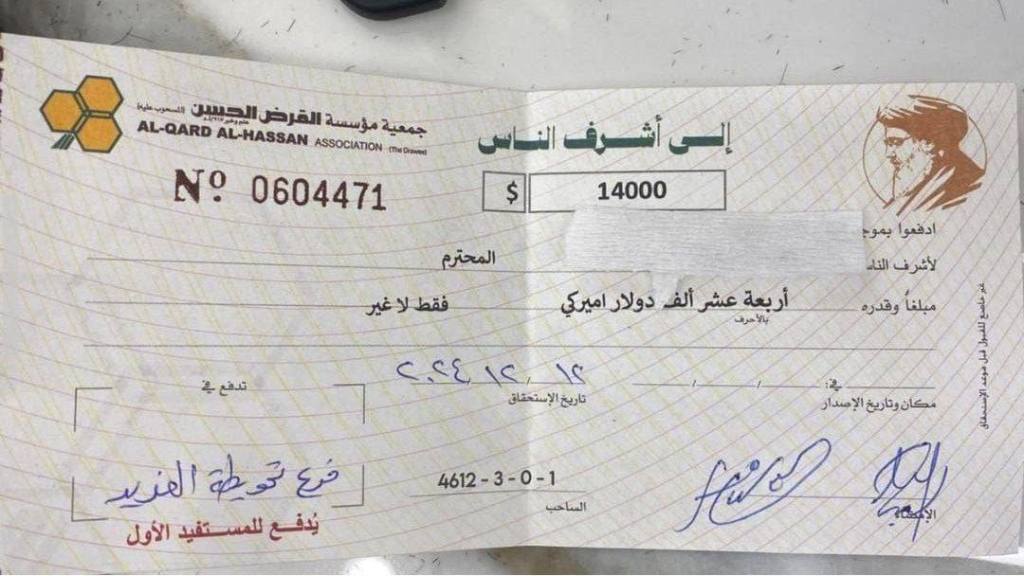
Economic and military resources not wasted on Syria will be directed to contributing members of AoR. Iran has started doing this: Hizballah is rolling out payments ranging from $14,000 to $18,000 to Lebanese citizens whose homes were ruined by Israel, and paying their rents until they can return. This will boost morale of the Lebanese irrespective of whether they support Hizballah or not.
It will take a miracle for Tehran to recoup the $30–50 bil. owed by Damascus. Iran’s “sunk costs” will be written off; however, domestic pressures from Iranian citizens and members of parliament about Tehran’s Syria Project and outstanding debt will ease (in due course). Tehran is taking hits in global media that it has been weakened by events in Syria. Tehran is quite likely to demonstrate its military potency to salivating enemies in the West, and to allies in AoR, through Operation True Promise III. The Op will probably be deadly. Tehran will doubtless want to dispel the appearance of weakness in light of Trump’s imminent return.
 Perspectives
Excellent analysis— but why are we assuming Assad fell in an event of spontaneous combustion? Those events like color revolutions & ‘Jihadists’, are CIA/Zionist creations.. you think Iran & Russia didn’t see this coming? Extracting Assad was asylum?? Or was Bibi baited into going into Syria where the resistance will annihilate him causing his ousting? And the opposition who comes to power will want Assad back simply because the devil you know is better than the devil you don’t.
LikeLike