“Contain Iran,” “contain Russia,” and “contain China” are mantras in Washington, D.C. “Containment,” a concept introduced in George Kennan’s “The Sources of Soviet Conduct” (1947), and expanding on his celebrated “Long Telegram” (1946), has been misapplied by U.S. policymakers, from Vietnam to post-Soviet Russia to Iran.
Washington latches onto “containment” but ignores virtually all else in Kennan’s analyses. Ignored aspects include the imperatives for maintaining “health and vigor” of American society; and presentation by the U.S. of a “positive and constructive picture” of the world that the U.S. is trying to foster.
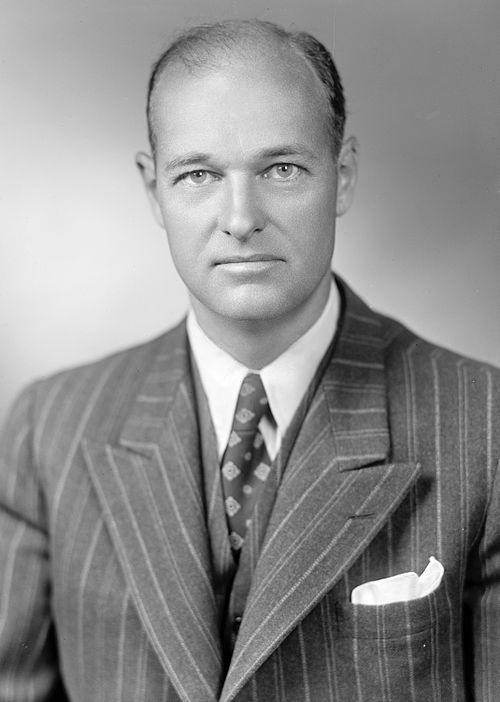
(1) Containment: Context & Warnings
Kennan’s “Sources of Soviet Conduct,” contextualizes “containment,” and warns against “outward histrionics” by U.S.: “threats or blustering or superfluous gestures of outward ‘toughness’,” and for U.S. to avoid demands “detrimental to Russian prestige.”
“the main element of any United States policy toward the Soviet Union must be that of a long-term, patient but firm and vigilant containment of Russian expansive tendencies. It is important to note, however, that such a policy has nothing to do with outward histrionics: with threats or blustering or superfluous gestures of outward “toughness.” While the Kremlin is basically flexible in its reaction to political realities, it is by no means unamenable to considerations of prestige. Like almost any other government, it can be placed by tactless and threatening gestures in a position where it cannot afford to yield even though this might be dictated by its sense of realism. …it is a sine qua non of successful dealing with Russia that the foreign government in question should remain at all times cool and collected and that its demands on Russian policy should be put forward in such a manner as to leave the way open for a compliance not too detrimental to Russian prestige.”
Kennan, “Sources of Soviet Conduct”—
Under Bush, Obama, Biden, and Trump, “outward histrionics”—threats, blusters, sanctions, and “superfluous gestures of outward ‘toughness’”—have targeted Iran, Russia, and China. Arbitrary deadlines of “do ‘x’ in 10 days or…,” and demands for “unconditional surrender,” are vacuous. No self-confident, proud, and militarily powerful nation will accept arrogant demands. Russia, China, and Iran bristle at American histrionics, and cooperate to counter threats to their strategic objectives and global prestige.
(2) “Health and vigor” of U.S. Home Front
Forgotten advice includes the importance of economic, social, and political health of the U.S. home front; and how the world sees the U.S. The U.S. should be a model for emulation.
“Much depends on health and vigor of our own society… We must formulate and put forward for other nations a much more positive and constructive picture of sort of world we would like to see…Finally we must have courage and self-confidence to cling to our own methods and conceptions of human society… the greatest danger that can befall us in coping with this problem … is that we shall allow ourselves to become like those with whom we are coping
Kennan, “Long Telegram”—
(3) “Responsibilities of a World Power”
“It is rather a question of the degree to which the United States can create among the peoples of the world generally the impression of a country which knows what it wants, which is coping successfully with the problems of its internal life and with the responsibilities of a world power…”
Kennan, “Sources of Soviet Conduct”—
Eisenhower’s Approach
Kennan disagreed with the militarization of “containment,” which he intended to be multi-faceted and flexible approaches towards the USSR. Eisenhower took a multi-faceted approach to national security, and by extension, to Kennan’s concept of containment. He ended the Korean War; expanded the U.S. nuclear arsenal and doctrines; and build up the U.S. Armed Forces. Military aspects of containment were achieved not by fighting foreign wars, but through aggressive intelligence operations against the USSR.

Ike refused to get entangled in Vietnam after Dien Bien Phu (1954). When DOD offered plans to use nuclear weapons on Vietnamese, he famously replied “You boys must be crazy” (p. 7). Following the Soviet invasion of Hungary (1956), Ike weighed options but rejected conflict. Apart from the Korean War (ended 27 June 1953), only one U.S. Servicemen (if memory serves me) died overseas under Ike (in “Operation Blue Bat,” Beirut, 1958).
Ike promoted the “health and vigor” of the nation. He acted the part of the kindly uncle, golfing, encouraging Americans to live their lives, and emphasizing economic growth: “Eisenhower’s record of strong growth and low inflation was better than that of any other post-World War II President.” FY1960 yielded a budget surplus of $1.1 billion—a huge figure in 2025 dollars. GDP grew 140.47%, from $387.980 bil. (1/1/1953) to $545.018 bil. (in 1/1/1961).
Post-Mortems for U.S. Foreign Policy
Post-mortems for U.S. misapplications of “containment” will produce innumerable Ph.D. theses. U.S. global standing declined with the “Global War on Terror”: millions dead, Iraq War, black sites, rendition, torture, drone strikes, Abu Ghraib, etc.; ignoble defeats in Iraq and Afghanistan; and support for Israel and Genocide, have indisputably proved that the U.S. has “become [worse than] those with whom we are coping.”
The Maidan Coup (2014), proxy war in Ukraine, fake negotiations with Iran, and attacks on Iran by U.S. and its psychotic pit bull in contravention of the UN Charter and NPT, are not “positive and constructive” images, nor show the U.S. advancing its “responsibilities [as] a world power.”

U.S. is not “coping successfully with the problems of its internal life.” Political-social strife; rising crime and illegal immigration; attacks on the First Amendment and suppression of legitimate protests against Genocide; crumbling infrastructure (rails, roads, etc.); decline in manufacturing, and so forth, prove that the U.S. is not coping successfully.

The “health and vigor” of the U.S. is on life support. When Bush took office, 20 Jan 2001, he inherited a budget surplus of $236 billion and national debt of $5.8 trillion. The July budget deficit is $1.34 trillion; national debt, $37 trillion. Brown University’s “Costs of War” project show human and economic costs of GWOT. Bulk of U.S. debt was incurred in the GWOT; a major part of GWOT is the Iraq War (for Israel) and “containing” Iran (for Israel). Expansion of NATO and Ukraine War to “contain” Russia; and support for Israel since start of Genocide on 8 October 2023, have further burdened the U.S. fisc.
Conclusion
U.S. eviscerated the Rules Based Order® that it founded after WWII. The Global South has gravitated toward Russia, China, and Iran directly; or indirectly through organizations like BRICS and Shanghai Cooperation Org. U.S. influence has waned globally; the U.S. is loathed for its foreign wars (Yemen, Syria, Iraq, Iran, Afghanistan, etc.) and support for Israel; and U.S. is drowning in debts and deficits. “Containment” is working.
 Perspectives
You must be logged in to post a comment.