“Containment” of Russia and Iran

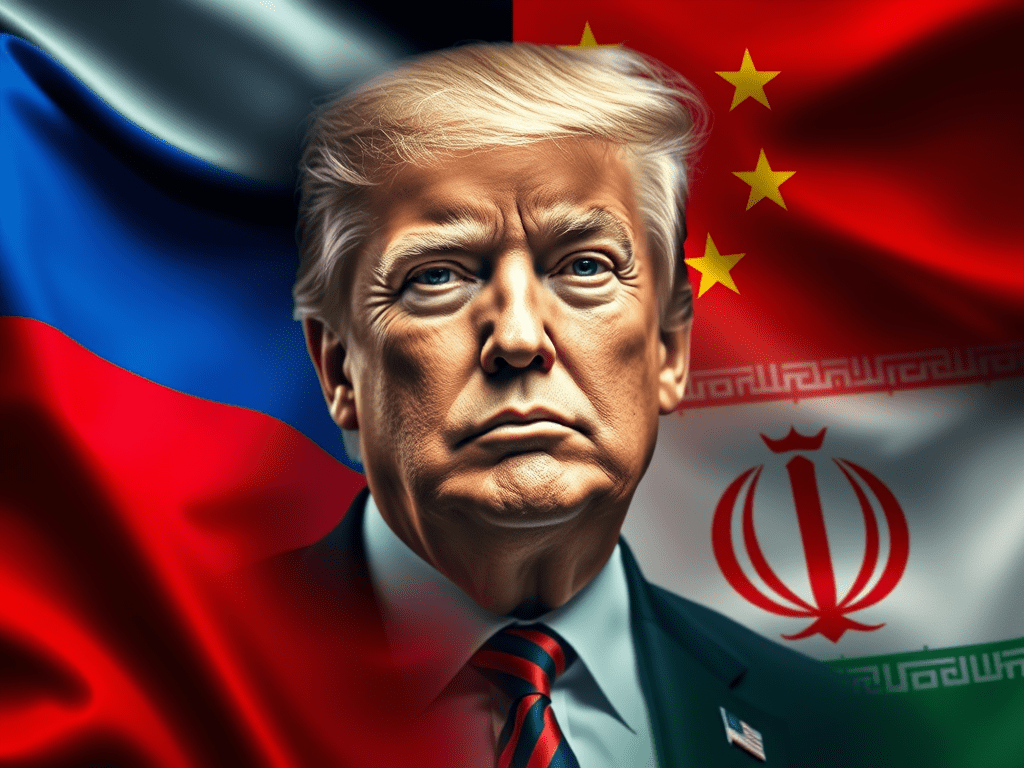
“Contain Iran,” “contain Russia,” and “contain China” are mantras in Washington, D.C. “Containment,” a concept introduced in George Kennan’s “The Sources of Soviet Conduct” (1947) and expanding on his celebrated “Long Telegram” (1946), has been misapplied by U.S. policymakers, from Vietnam to post-Soviet Russia to Iran.

Ukraine Minerals Agreement: Most Valuable Minerals are in Russian Territories

Trump’s “minerals deal” is a “nothingburger.” The bulk of Ukraine’s natural resources (oil, gas, diverse metals, etc.) are, or will be, under Russian control. There is nothing the USA, UK, and EU can do to change reality on the battlefield. The minerals in “rump Ukraine” can be exploited after the war, but the deposits are assuredly less valuable than the natural resources of “former Ukraine” that Russia will acquire.

Iran-Russia Strategic Cooperation Agreement

Signed 17 January 2025, Kremlin, Moscow, between Masoud Pezeshkian and Vladimir Vladimirovich Putin. The agreement had been negotiated for years, but the U.S.-NATO imposed war on Russia, and decades-long U.S.-Israel economic war imposed on Iran, added impetus to negotiations and shaped the agreement. The full text has been published. The partnership includes military and intelligence cooperation in addition to economic, energy, and science and technology cooperation.

NATO’s Proxy War on Russia: “Tell Me How This Ends”

When David Petraeus was asked by a journalist at the onset of the Iraq War on the outcome, he replied “Tell Me How This Ends.” A bold but reasonable prediction by me on the outcome of the Russia-Ukraine War: it will not end through any settlement proposed by Trump. It will end with an unambiguous Russian military victory over Ukraine—NATO’s “battering ram” against Russia.

Russia’s “Oreshnik” Missile System

A classic tale of FAFO. The U.S. quit INF in 2019, freeing Russia to renounce its obligations under INF, and to produce intermediate-range missiles. After the geniuses in Washington and London authorized use by Ukraine of their missile systems to strike inside Russia, the Kremlin showed just one of its newest missile systems: Oreshnik (“Hazel). It’s a beauty. What else does Russia have in store for NATO?

Russia’s Economic Windfalls from the Ukraine War

Russia is experiencing higher budget outlays in prosecuting the Ukraine War, but these expenditures should be considered “investments” because they will generate revenue streams for decades after the war. Russian investors have acquired at steep discounts the multi-billion dollar investments made in Russia by foreign companies; and the Russian Federation will annex many of Ukraine’s most fertile agricultural lands; and lucrative hydrocarbon reserves and mineral deposits.

Kiev’s Kursk Incursion and Implications for Iran

Vladimir Putin is incensed by Kiev’s recent incursion into Kursk, which surely had NATO/US support. He has pledged to support America’s enemies. If NATO/US can supply Ukraine and say, “it doesn’t matter how they [the weapons] are used,” Russia can also supply “someone with something [and say] we do not control anything.” Game on!

Paean to an Alligator

I am not a combat helicopter man, being from the “boom, boom, boom, artillery” school; hence my focus on artillery and missile systems. However, I have fallen in love with Russia’s Ka-52 “Alligator.” It is clearly the finest attack helicopter in the business; far superior to the Cobra and Apache attack helicopters that witnessed action in Afghanistan and Iraq.