Russia’s non-delivery to Iran of twenty-five Su–35 multirole fighters may be indicative of Russia’s reluctance to overtly arm Iran at a moment when Iran is threatened by Israel and U.S., thereby antagonizing Israel’s primary protector just when U.S.-Russia negotiations could yield diplomatic and economic benefits to Russia.

Iran’s Su–35 Orders
Iran placed orders for fifty Sukhoi Su-35 fighter jets: 25 slated for delivery in 2024–25 (by end of the Persian year 1403 AHS, that is, to 20 March 2025); and 25 for delivery in 2026–30. Iran received two disassembled Su–35SE aircraft on 18 Nov 2024 from the factory at Komsomolsk-on-Amur, in Russia’s far east (home to Su–35 and Su–57 production). The first group of Iranian Su–35SE trainers completed their program in Dec. 2024; the second group completes their program in spring 2025. One squadron of 25 jets is to be based in Hamadan; the second squadron, also 25 jets, at Isfahan (sources: Project Meshkat; Middle East Spectator; Military Watch Magazine). There are no known sightings of the two Su–35SE jets delivered in Nov. 2024 (assuming Russian technicians assembled the aircraft and both are air worthy).
Russia’s Delivery of Su–35 jets to Algeria
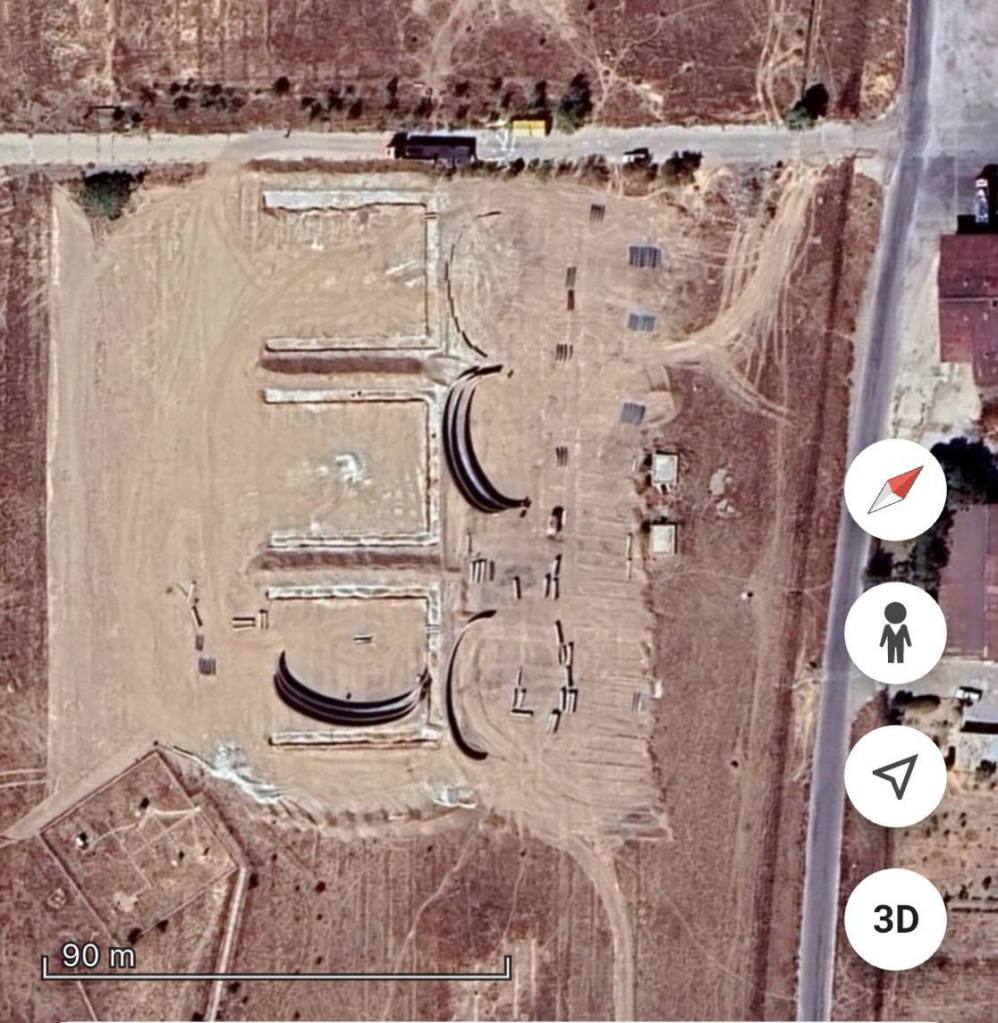
Cairo placed an order for two dozen Su–35 fighters in 2018, but was forced to cancel following threats by the usual culprits. On 13 March 2025, Algeria received the first of two dozen Su-35 fighters. This was a re-direction of Egypt’s order, but Algeria never ordered Su–35 fighters; they ordered the Su–57 fighter. One opinion is that Algeria’s acceptance of the Su–35 is an interim solution “linked to delays in the Su-57 production schedule.” Delays in Su–57 production are not Iran’s problem. To clarify, cockpit instrument panels, on-board systems, etc., of Russian jets manufactured for export are in English (h/t Amir for confirming this). In short, the Su–35 jets that landed at Oum Bouaghi Air Base (Algeria) could just as easily have landed in Isfahan or Hamadan. Hardened shelters have been built in Hamadan for Su–35 aircraft.

Iran’s S-300 Saga
The ongoing Su–35 saga has parallels to the Iran-Russia S-300 saga. In 2007, Iran signed an $800 million contract with Russia for the delivery of five battalions of S-300 air defense systems. In 2010, President Dmitry Medvedev (2008–12) annulled the contract, leading Iran to file a $4 billion lawsuit with an international arbitration court in Geneva. Moscow tried to persuade Tehran to withdraw the suit because it feared losing (the law was on Iran’s side). Meanwhile, Russia supplied Syria with its first S-300 missiles in 2013. The cancellation of the S-300 system led to Iran’s development of the Bavar-373 air defense system. Medvedev’s decision was influenced by Russian hopes for improved diplomatic and economic relations with the United States:
Russia’s policy reversal may have been contingent upon improving relations between Moscow and Washington, insofar as it occurred on the same day that the White House announced a June 24, 2010 summit meeting between presidents Barack Obama and Dmitri Medvedev, to be held in Washington.
Eric Moore, Russia-Iran Relations Since the End of the Cold War (New York, 2014), p. 38.
Putin’s Dilemma
Geo-political circumstances have changed since 2010. Iran and Russia are both heavily sanctioned, angry with the U.S., and have fused cooperation in multiple spheres, as evinced by the “Iran-Russia Strategic Cooperation Agreement” signed by both presidents and ratified by the legislatures of both countries. But the agreement (as an Israeli newspaper notes), “stops short of a mutual defense pact like the one signed between Russia and North Korea last year.” It is also not a suicide pact.
Opportunities for Russia Under Trump
Russia is facing an American president who is not hostile to Russia (cf. Biden and Obama), and who is seeking to end the Ukraine War, help re-integrate Russia with the global economy, recognize Russian-speaking territories of former Ukraine, lift some/most sanctions, etc. A Trump-Putin summit is quite likely. Trump, through tariffs and opposition to the Ukraine War, has thrown NATO and UK/EU bloc into disarray. The divide between U.S. and Europe is widest it has been in decades.
It behooves Russia to keep her enemies apart, while extracting concessions from Washington that UK/EU will reluctantly accept (in whole or in part). Putin does not need anything from the U.S., i.e., Russia will pursue its objectives in the Ukraine irrespective of who is in the White House; however, if Putin can secure concessions that shorten the war and reduce losses of Russian life, limb, and treasure, he has an obligation to the Russian nation to do just that.
Putin’s Two Paths
Option 1: Balance relations with Iran while pursuing negotiations with the U.S. (if negotiations fail, then see Option 2, below).
Option 2: Publicly join forces with Iran by supplying it with Su–35 jets.
Trump is devoted only to Israel. If Russia supplied Su–35 jets to Iran, and Russian-made jets disrupted the U.S.-Israel attacks (and cost American lives), Trump will have a tantrum. What can Trump do to Russia? No more than Obama and Biden have tried; however, he could re-commit to NATO (vis-à-vis Ukraine War) and unite (temporarily) with UK/EU in pursuing their anti-Russia objectives. This will prolong the war, and increase the economic and human toll on Russia.
Soup Nazi Style of Policy Making
Putin is intelligent, rational, and cautious. He makes policies that advance the national interests of Russia. His American counterpart, however, makes policy by tantrum, just like the Soup Nazi: “Tariffs for you! No tariffs for you! Sanctions for you! Quadzillion per cent tariffs for you!”
Remarks
When dealing with a Soup Nazi who makes policies by tantrums and tweets, it is best to proceed with caution. Russia will continue to maintain economic, military, and intelligence cooperation with Iran, but the Kremlin may have decided that the supply of Su–35 jets is a “bridge to far.” If negotiations fail, the Kremlin is likely to re-visit the Su–35 issue.
Addendum on Russia-China-Iran Machinations
Iran, Russia, and China are coordinating on the Iranian nuclear issue. On 14 March 2025, Foreign Minister of China, Wang Yi, and the Deputy Foreign Ministers of Russia and Iran, Sergey Ryabkov and Kazem Gharibabadi, met in Beijing to discuss the nuclear program. On Thursday, 17 April, Iranian FM Abbas Araghchi met with Putin and delivered to him (1) a private message from Ayatollah Khamenei; and (2) a formal invitation to visit Tehran, which was accepted and likely to take place in 2025. On Friday, 18 April, Araghchi met with Sergei Lavrov. Araghchi returned to Tehran, Friday, and is now in Rome for the second round of talks with Witkoff (19 April). The foreign ministers of Iran, Russia, and China will meet in Beijing next week [Update, 24 April: The Beijing meeting was between Araghchi and Chinese officials, including FM Wang Yi. Russian officials were not in attendance].
The “iceberg theory” used to describe Ernest Hemingway’s writing style applies to the Tripartite Alliance’s (Iran + China + Russia) machinations vis-à-vis the United States, where 10% of the story is explicit (proverbial “tip of the iceberg”), with the balance implied or left for readers to interpret. The Tripartite Alliance has a common enemy—the United States—and a common objective—expulsion of United States from West Asia. We will see more of the “iceberg” lurking below the surface.
 Perspectives
You must be logged in to post a comment.