Euro Troika (UK, FR, DE) are threatening to trigger “Snapback Sanctions” on Iran. This would be an act of malevolence against the Iranian people given Israel’s and USA’s illegal attacks on Iran’s nuclear facilities. Iran, however, has potent “Snapback” tools at its disposal.

The Troika’s Threat
France’s foreign minister, Jean-Noel Barrot, stated that if no “concrete progress” is made on reaching a nuclear agreement by the end of August, the Troika plans to trigger the UN snapback mechanism. This angered Iranians. Firstly, Iran complied with JCPOA despite (i) Trump’s unilateral withdrawal in 2018; and (ii) non-compliance with JCPOA terms by the Troika due to fear of U.S. secondary sanctions. Secondly, Iran’s nuclear facilities were attacked by Israel and U.S. in violation of international law. Thirdly, as international law expert Reza Nasri explains, the attacks obviated legal bases for triggering snapback. If the Troika were to trigger snapback, it would be an act of pure malice.
Iranian Anger
Iran has legal options should snapback be triggered; for example, withdrawal from NPT (see Iran: Snapback Sanctions, 6 June 2025). However, Iranians, leaders and peoples, are angry with the U.S., UK, and EU, especially with Germany, where Chancellor Merz applauded Israel’s attack because Tel Aviv was doing “our dirty work.” Germany is pushing snapback. Berlin’s belligerence has generated discussions in Iran about sealing the Straits of Hormuz to German vessels.
Asymmetric Retaliation
Snapback would be a new level of economic warfare against the Iranian nation. It is reasonable, therefore, that Iran conduct economic warfare against its tormentors. France receives millions of barrels of oil products to ports at Le Havre, Marseille, and Nantes-Saint-Nazaire; Britain to Tees & Hartlepool, Grimsby and Immingham, Southampton, Forth, Milford Haven, and London; and Germany to five ports (map). Wilhelmshaven is its sole deep-water port, receiving the bulk of imported crude. Germany is dependent on imports from North America and the Middle East.
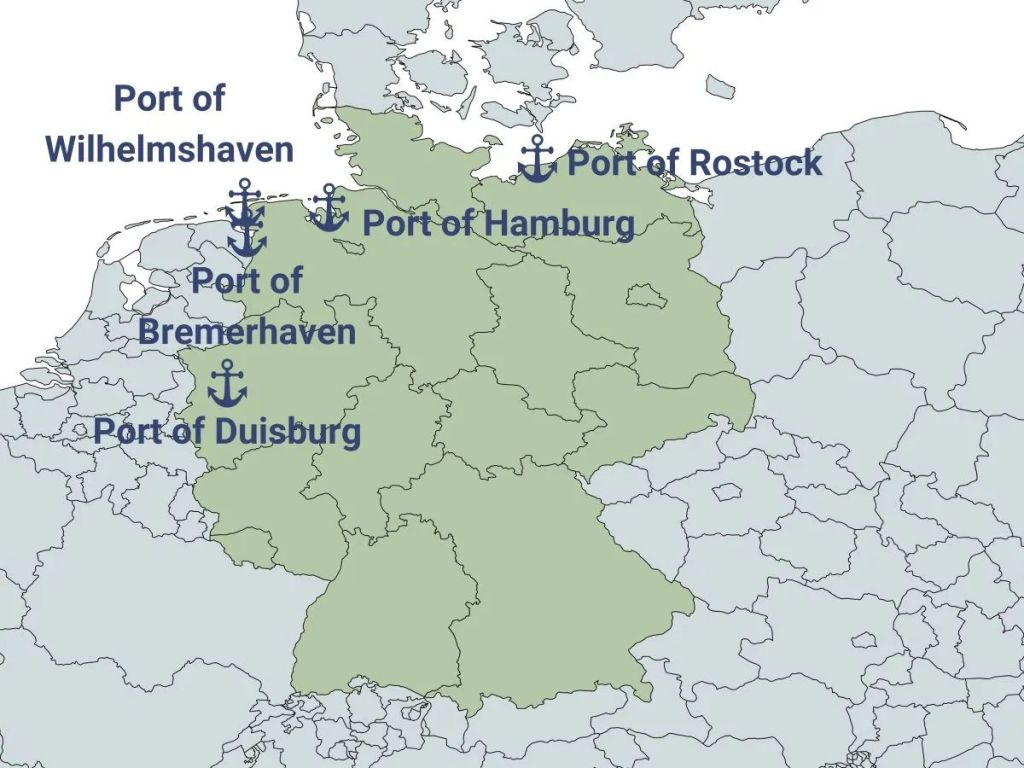
Iran is likely to go beyond sealing the Straits to DE, FR, and UK maritime traffic. In 2019, explosions in the Gulf of Oman crippled cargo ships and oil tankers. If, however, Iran chooses to retaliate against ships flagged to Troika members, it will not limit itself to blowing tiny holes in hulls to send messages to the Troika—as it did with the U.S., UAE, and Saudi Arabia. Iran will cause severe harm.
“Very Large Crude Carriers” (VLCCs, ca. 2 mil. barrel capacity) traversing the English Channel; and VLCCs and “Ultra Large Crude Carriers” (ULCCs, ca. 3-4 mil. barrel capacity) headed to German ports, risk being sunk. Amoco Cadiz ran aground off Brittany (1978), broke apart, and disgorged 1.6 mil. barrels of oil, causing ecological and economic harm. An incident off the British, French, or German coasts will be catastrophic. ULCCs and VLCCs are built more sturdily today, but explosives placed in strategic points can cause a VLCC/ULCC to break-up and disgorge oil.
Final Word
If Iran chooses asymmetric retaliatory paths against Germany, Britain, or France, the Troika will regret triggering snapback.
 Perspectives
You must be logged in to post a comment.